Morning Coffee: Goldman Sachs AI agents are difficult to turn into Goldman Sachs bankers. How to behave when there’s 2,200 redundancies
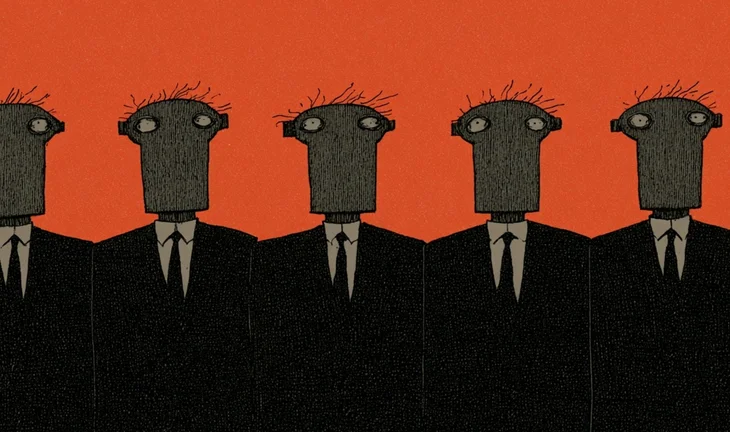
It is something of a commonplace in the investment banking industry that Goldman Sachs bankers are not necessarily the most talented, or even the hardest working, but that the reason they stay at the top of the league tables is that they have a fantastic corporate culture of teamwork. This isn’t necessarily the whole truth – there’s a lot of sour grapes and jealously – but it does capture an important point about Goldman, that in almost area the firm does business, the whole is greater than the sum of its parts. How do you continue that kind of competitive advantage in a world where most of the work is done by AI agents?
💥Follow us on WhatsApp for news alerts.💥
Marco Argenti, Goldman’s head of engineering, has discovered it’s not so easy. As well as the general skills built into agentic systems like Claude and Devin, there are a lot of “tricks and tribal knowledge” that needs to be learned. It’s not enough for the Goldman agents to be able to write clean code; the bots need to work in a way that respects Goldman Sachs’ data standards and security protocols. They also need to follow the same ways of thinking and “engineering tenets” as the firm’s human developers, so that the AI-generated applications and services fit in well with the overall architecture, and are easy to pick up and maintain. As Argenti puts it, “The unwritten rules are the ones that are actually harder to capture.”
This raises two questions – how do you do that, and how on earth do you do that? Goldman is trying to interview its best engineers and analyse their output to come up with new “skills” that can be built into the AI agents. But as well as that, the developers are apparently spending more and more of their time communicating directly with the software, doing things which would be called “mentoring” if there was a human being on the receiving end.
Which is kind of ironic, because elsewhere in investment banking, the people who might otherwise be expected to take a mentoring role are now being mentored themselves, by junior employees and even interns, who are teaching them how to use AI. When they have learned their lessons, presumably the Managing Directors will start to use agents, and come up against the same problems of tribal knowledge and unwritten rules which Marco Argenti’s developers are currently experiencing.
It’s no wonder that some people, including Goldman partner Chris Churchman, are beginning to worry that if bankers spend all their time fine-tuning the AI system and relying on its output, they will gradually lose all the analytical skills and judgement which made them valuable in the first place.
In the meantime, we note that “the need to provide role models so the next generation of bankers can serve their apprenticeship” was one of the last justifications for demanding an end to remote working. That’s surely not going to be sustainable in a world where an MD’s most important mentoring relationship is with an interface stored on his or her phone.
Elsewhere, it’s the 25th anniversary of the most expensive free lunch in the history of banking, enjoyed by six bankers and traders from Barclays, at Marcus Wareing’s legendary restaurant Petrus. In one sense it was a free lunch, because having served the bankers £44k worth of vintage French wine (equivalent to about $115k in 2026 money), the restaurant decided to give them the actual food on the house.
In another sense, however, it was an extremely expensive lunch, because when the story hit the papers, Barclays fired five of the six, only sparing the most junior diner, who had only just joined and was felt not to be at fault. It wasn’t a matter of corporate expenses – the bankers paid the bill themselves – but rather a question of taste, as it came shortly after the bank had made over 2,000 of its staff redundant.
It’s a similar story to the legendary Deutsche Bank tailors, which made Christian Sewing so angry. Luxury consumption is part of the fun of being a banker, but save it for the times when everyone’s doing well.
Meanwhile …
The Chinese IPO market is back to levels not seen since 2023, and the workload is apparently just as crazy. Investors and bankers are struggling to keep up, liquidity is stretched and apparently the exchanges have called some brokerages in for a quiet word about the quality of paperwork. (Bloomberg)
The East coast of the USA isn’t quite as important as the West coast when it comes to the software industry, but JP Morgan certainly seems to think it’s worth investing in. After recently hiring David Fishman from BoA, it’s now brought in Dan McDow, formerly head of Citi’s software group, to run tech investment banking in the earlier time zone. (Finimize)
An important victory for Dan Reynolds and Silvana Schenone of Barrenjoey – their former employer, Jarden, has not managed to get a court order requiring them to hand over their phones in the Great ANZAC Poaching Raid litigation (AFR)
The defence industry is still one of the hottest sectors. Jean Stack and John Song have been a team of dealmakers in “defense, space and government” in Washington DC since their days at Houlihan Loukey, and they have now been hired from Baird to build up a practice for Evercore. (Bloomberg)
Robert Kennedy and JD Vance are apparently on a “steak and sauerkraut” diet which keeps them svelte and healthy. The only drawback is “slightly sulfurous odours”, so let’s definitely hope that this doesn’t catch on in banking. (WSJ)
One might have thought that the success of “Industry” would mean that everyone wants to do a show about investment bankers. But Mindy Kaling’s “Not Safe For Work” has been cancelled after a single season. (Variety)
Follow me on X. Follow me on LinkedIn.
Have a confidential story, tip, or comment you’d like to share? Contact: +44 7537 182250 (SMS, Whatsapp or voicemail). Telegram: @SarahButcher. Signal: sarahbutcher.22 Click here to fill in our anonymous form, or email editortips@efinancialcareers.com.
Bear with us if you leave a comment at the bottom of this article: comments are moderated intermittently by human beings. Sometimes these humans might be asleep, or away from their desks, so it may take a while for your comment to appear. You must take sole responsibility for comments you post on this site. We will take reasonable steps to weed out anything that we consider to be offensive or inappropriate.


