Morning Coffee: The worst deal ever, and it still might be affecting bonuses. Barclays demonstrates that nice bankers sometimes still lose
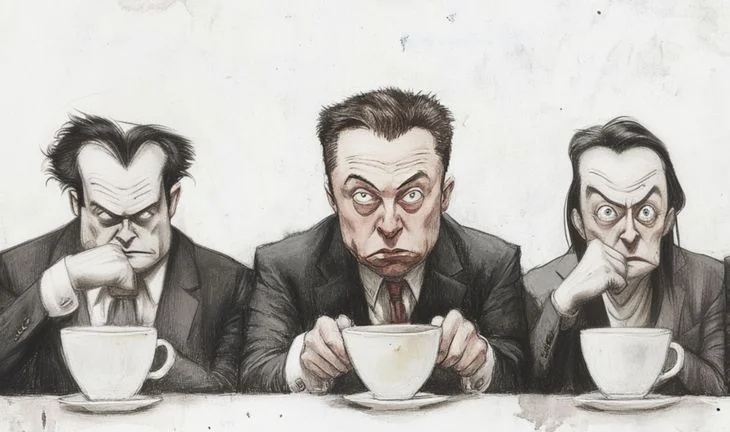
It’s official – the financing for Elon Musk’s acquisition of Twitter (X) is the worst leveraged finance deal since the great crisis, and consequently a strong podium contender for the worst deal of all time. It’s been “hung” (stuck on the banks’ balance sheets rather than sold to investors) for nearly two years now, and at $13bn it’s one of the largest hung deals of all time.
About the only good thing you can say about the financing is that the payments are still being made, so far. But the future looks very uncertain – Twitter has an annual interest bill that might be as high as $1.5bn, while revenues have been estimated on course for $600m this year. And although bankers have been pitching Elon for a while with proposals for him to refinance the non-recourse loans and give them a personal guarantee collateralised against his Tesla wealth, so far he hasn’t shown much interest in doing so.
Perhaps the tech banking teams at Morgan Stanley and Bank of America ought to be weighing in on the microblogging site. They could post attractive content, encourage civility and generally try to stem the tide of high value users leaving for other sites. But although Michael Grimes of Morgan Stanley is famous for these high-profile demonstrations of customer loyalty, he’s unlikely to be able to turn things round on its own.
Which raises some awkward questions – what does it mean for the bankers involved when the star deal of 2022 becomes the biggest embarrassment of 2024? True, the Twitter loan hasn’t gone bad yet, and syndicate banks like Mitsubishi UFG are still saying things like “We anticipate reaching a positive outcome [from conversations with Musk and his team] regarding repayment”. But the fact is that for most of the banks involved, selling their exposure at anything like the kind of price that would be achievable in the secondary market would mean crystallizing losses that could run well into nine figures.
That would be enough to wipe out several years worth of revenues, including revenues from some of the best bonus years in recent tech banking history. Barclays has already carried out a form of clawback, cutting compensation by at least 40% for its top M&A bankers last year and making it clear that this deal was a big part of the reason for doing so. There will have been similar blame exercises across the Street.
But if you do that, you risk losing the bankers. They might reasonably argue that the deal is hung because the interest rate cycle changed, not because of anything that might be blamed on them. And if you lose the bankers with a connection to Elon, then you’re not very likely to feature high up in the syndicate for the IPO of SpaceX. Or of Neuralink. Or whatever Musk’s AI play turns out to be, or in any deals involving Tesla. So although it might feel like throwing good money after bad, many banks will end up gritting their teeth and muttering that bygones are bygones.
Elsewhere, the former colleagues of Khilna Morjaria will probably be slightly saddened to hear that she’s lost her harassment and discrimination lawsuit against Barclays. She was extremely popular in the tax compliance department, with a reputation for buying flowers when people were ill. She even used to get performance reviews saying things like “If we had more people like Khilna then the bank would be in a much better place”.
But unfortunately, law courts aren’t set up to decide who’s a nice person. And although her boss seems pretty bad (sometimes taking credit for her work and running an “overly hierarchical” division), the court found that Barclays actually treated her pretty well, investigating her complaints thoroughly and making numerous accommodations to transfer her to other work without losing seniority.
As always, the message is that it’s very rare for anyone to come out of an employment court feeling like a winner. Like so many other claimants, Ms Morjaria seems to have suffered significant damage to her health from the stress of the official grievance process followed by the lawsuit. If your job is making you miserable, it’s usually much better to find another one.
Meanwhile …
They were the best of clients, they were the worst of clients. Although getting through the many layers of gatekeepers at the Saudi Public Investment Fund was something of a nightmare for bankers, the huge fees they were paying to the Street made it worth the trouble. Now, the PIF is close to reaching its target allocation to international investments and concentrating more on developing domestic capital markets – they’re on the way to becoming a more “normal” client. (FT)
Matt Beitzel, who was formerly Citi’s head of North American banks coverage, is joining Goldman Sachs’ FIG team as an unusual Partner-level hire. (Reuters)
Best wishes to David Goel, who is closing down Matrix Capital Management (a Tiger Cub fund with $11bn under management). He has made the decision due to “health problems”, which he understandably wants to keep private. (Bloomberg)
“Workaholic Germans” has always been something of a stereotype only loosely based in fact, but it’s increasingly being completely falsified by a younger generation that wants a day a week for their side-hustles and an older generation with an eye on retirement. The country’s finance minister wants Germans to “fall back in love with overtime”. (WSJ)
Have a confidential story, tip, or comment you’d like to share? Contact: +44 7537 182250 (SMS, WhatsApp or voicemail). Telegram: @SarahButcher. Click here to fill in our anonymous form, or email editortips@efinancialcareers.com. Signal also available.
Bear with us if you leave a comment at the bottom of this article: all our comments are moderated by human beings. Sometimes these humans might be asleep, or away from their desks, so it may take a while for your comment to appear. Eventually it will – unless it’s offensive or libellous (in which case it won’t.)